Finding satisfying vegetarian food near me in New Jersey is no longer only about locating a restaurant with a few meat-free dishes on the menu. Many diners now want meals designed around vegetables, lentils, grains, fermented batters, spices, chutneys, and traditional recipes from different regions of India.
That distinction matters. At a vegetarian Indian restaurant, dishes such as dosa, idli, sambar, pongal, paneer curries, chaat, and Indian breads are not substitutes for meat-based meals. They belong to culinary traditions that have developed independently over generations.
For families, vegetarian diners, and anyone exploring Indian Restaurants in New Jersey, understanding those traditions can make choosing where, and what, to eat much easier.
What Are Diners Looking for When Searching for Vegetarian Indian Food?
People searching for a Vegetarian Indian Restaurant Near Me are usually looking for more than meat-free options. They may want a fully vegetarian menu, familiar South Indian dishes, family-friendly meals, breakfast choices, balanced lunches, or traditional Indian food that gives vegetables, lentils, rice, and grains a central role.
This is why searches such as Indian Food Near Me, Indian Restaurant Near Me, and Indian vegetarian restaurant near me NJ can represent several different dining needs.
A family may want a restaurant where everyone can share multiple dishes. Someone from South India may be searching for familiar breakfast foods. A first-time diner may simply want to understand what vegetarian Indian cuisine offers beyond paneer.
The most useful way to choose is therefore not just by looking at how many vegetarian dishes appear on a menu, but by considering the style of cuisine and how the dishes are traditionally eaten together.
Why Is South Indian Vegetarian Food Different?
South Indian vegetarian cuisine commonly places rice, lentils, fermented batters, coconut, tamarind, curry leaves, mustard seeds, vegetables, and spices at the center of the meal. Compared with many familiar North Indian dishes, it often features more fermented foods, rice-based preparations, tangy accompaniments, and lighter lentil-based combinations.
One important thing for diners to know is that “South Indian food” is not a single cuisine. Tamil Nadu, Karnataka, Andhra Pradesh, Telangana, and Kerala each have distinct cooking traditions.
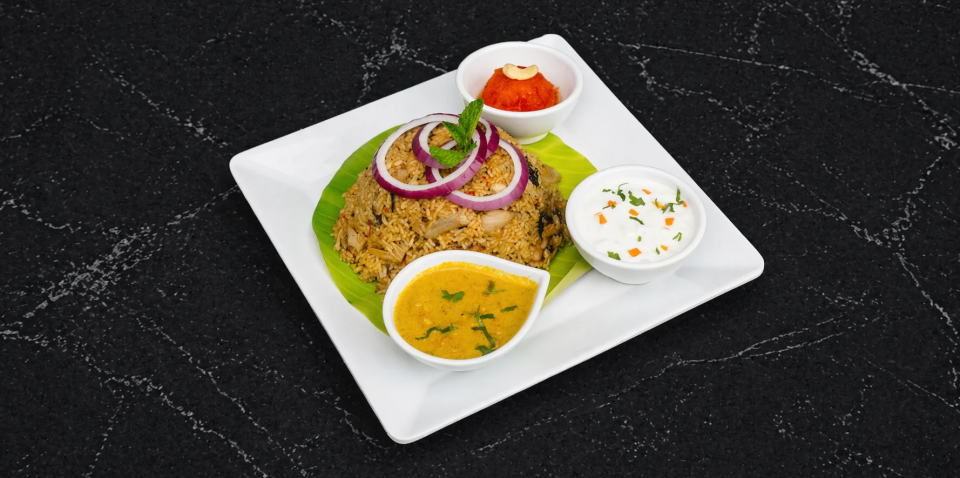
For example, dosa and idli rely heavily on fermented rice-and-lentil batter. Sambar combines lentils with vegetables and a tangy element, usually tamarind. Pongal creates an entirely different experience by cooking rice and lentils until soft and comforting, often with black pepper, cumin, ginger, and ghee.
These traditions help explain why South Indian Food in New Jersey appeals not only to vegetarians but also to diners looking for meals with contrasting textures and flavors.
How Fermentation Changes the Flavor of Dosa and Idli
One of the most interesting aspects of traditional South Indian cooking happens before the food ever reaches the griddle or steamer.
Dosa and idli batter is generally made from rice and urad dal that are soaked, ground, combined, and allowed to ferment. Fermentation develops a mild tang and changes the texture of the batter.
The same basic culinary idea can then produce very different foods.
Idli is steamed, giving it a soft, airy, sponge-like texture that absorbs sambar and chutney easily.
Dosa is spread across a hot griddle, creating a thin surface with crisp edges and a lightly fermented aroma.
This is an important distinction for diners exploring Traditional South Indian dishes in New Jersey: technique can transform similar ingredients into completely different eating experiences.
What Should First-Time Visitors Order?
First-time visitors should consider ordering several contrasting dishes rather than choosing only one entrée. A combination such as idli, masala dosa, sambar, chutneys, a rice-based dish, and a vegetable or paneer preparation provides a clearer introduction to the textures, cooking methods, and flavors found across vegetarian Indian cuisine.
For breakfast or a lighter meal, idli is an approachable starting point. Its gentle flavor makes the accompanying sambar and chutneys especially noticeable.
A masala dosa offers more contrast: a crisp fermented crepe surrounds a softly spiced potato filling, usually accompanied by lentil-based sambar and chutneys.
Those who enjoy richer flavors may explore paneer-based preparations or vegetable curries served with breads. Rice dishes and lentil preparations can help round out a group meal.
Families visiting a Pure Veg Restaurant in New Jersey may find sharing especially useful because it allows children and first-time diners to sample small portions before choosing favorites.
A2B and Vegetarian Dining Across New Jersey
After understanding what diners may be looking for, A2B becomes relevant as one option within New Jersey’s vegetarian Indian dining landscape.
A2B serves vegetarian Indian food with a strong presence of South Indian preparations. For diners looking for an Indian restaurant in South Plainfield NJ, Indian restaurant in Parsippany NJ, or Indian restaurant in Princeton NJ, its New Jersey locations make this style of food available across several communities.
The menu format also works for different dining occasions, from Indian breakfast in New Jersey to lunch, dinner, family meals, and group dining.
Rather than approaching the menu as a collection of individual dishes, diners can get more from the experience by combining different preparations—something that reflects the way Indian meals often balance starches, lentils, vegetables, sauces, and accompaniments.
How Families Can Build a Balanced Indian Meal
Ordering for a family becomes easier when the table includes different textures and levels of intensity.
A practical combination might include:
- Something crisp: dosa or another griddle-cooked preparation
- Something soft: idli, pongal, or a rice preparation
- Something lentil-based: sambar or dal
- Something vegetable-forward: a vegetable curry or dry preparation
- Something richer: paneer or a creamy curry
- Accompaniments: coconut chutney, tomato-based chutney, pickles, or other sides
This approach helps prevent everyone from ordering dishes with nearly identical flavor profiles.
It is particularly useful when visiting a family friendly Indian restaurant in New Jersey, where grandparents, adults, children, and first-time Indian-food diners may all have different preferences.
What Makes a Good Vegetarian Lunch or Dinner?
A satisfying vegetarian Indian lunch or dinner should provide contrast rather than simply volume. A well-rounded meal typically combines grains or breads, lentils, vegetables, protein-rich ingredients such as dal or paneer, and acidic or spicy accompaniments that prevent richer dishes from becoming monotonous.
That is useful to remember when searching for Indian Lunch Near Me New Jersey or Indian Dinner Near Me New Jersey.
For an office lunch, dosa, rice-based dishes, or structured meal combinations may be easier when diners want something filling without ordering many separate plates.
Dinner often creates more opportunities for sharing. Families and groups can combine dosas or appetizers with curries, breads, rice, and lentil dishes.
For weekend dining, sharing several smaller selections can also make the meal more exploratory without requiring everyone at the table to order the same style of food.
Why Chutney and Sambar Matter More Than You Think
Diners unfamiliar with South Indian cuisine sometimes treat chutney and sambar as optional side dishes. Traditionally, however, they significantly change how foods such as dosa, idli, and vada taste.
Coconut chutney can bring creaminess and freshness. Tomato or chilli-based chutneys can introduce acidity and heat. Sambar contributes lentil richness, vegetables, spices, and tanginess.
Try eating a piece of dosa on its own, then another with coconut chutney, and another dipped into sambar. The same dosa produces three noticeably different flavor combinations.
This illustrates an important idea in Indian dining: accompaniments are often active parts of the dish rather than decoration.
Vegetarian Dining for Families, Groups, and Celebrations
A Vegetarian Indian Restaurant Near Me can be particularly practical when dining with groups that include vegetarians or people with different food preferences.
A fully vegetarian menu removes the need to search through a primarily meat-focused menu for suitable dishes. It also allows groups to explore a wider range of vegetable, lentil, paneer, rice, bread, and South Indian preparations together.
For New Jersey families, this can work well for casual weekend meals, extended-family gatherings, community meetups, and celebrations.
Larger occasions may also lead diners to search for Indian Veg Catering Services New Jersey, especially when a vegetarian menu needs to accommodate guests with varied tastes. For catering, it is worth considering balance just as carefully as restaurant ordering: include mild dishes, richer dishes, rice, breads, lentils, vegetables, and a few stronger flavors rather than building the entire menu around one style.
Frequently Asked Questions
Is South Indian vegetarian food always spicy?
No. South Indian food can include chilli and strong spices, but not every dish is intensely hot. Idli, dosa, pongal, coconut chutney, rice preparations, and many lentil dishes can be relatively mild. Heat also varies by recipe. First-time diners or families with children can combine gentler dishes with spicier chutneys or curries separately.
What vegetarian Indian dishes are good for first-time diners?
Masala dosa, idli with sambar, vegetable curries, paneer preparations, dal, rice dishes, and Indian breads are approachable starting points. Dosa provides crisp texture and mild fermentation, while idli is soft and neutral enough to showcase chutneys and sambar. Ordering several dishes for the table is often the easiest way to understand the variety of Vegetarian Indian Food in New Jersey.
Is A2B suitable for family dining in New Jersey?
A2B can suit families looking for vegetarian Indian dining because the menu includes dishes that can be shared and options with different textures and flavor intensities. Diners around South Plainfield, Parsippany, and Princeton can consider it when searching for a family friendly Indian restaurant in New Jersey, particularly when the group wants South Indian and other vegetarian Indian choices.
What is the difference between a vegetarian restaurant and a pure veg restaurant?
In Indian dining terminology, a vegetarian or “pure veg” restaurant generally focuses entirely on vegetarian food rather than simply offering vegetarian options alongside meat dishes. Dairy ingredients such as milk, yogurt, paneer, butter, or ghee may still be used. Diners following vegan diets should therefore ask specifically about dairy and other ingredients before ordering.
A Broader Way to Explore Vegetarian Indian Food in New Jersey
The most rewarding way to explore Best Vegetarian Food in New Jersey is not to search for one supposedly perfect dish. It is to understand how different foods work together.
Dosa demonstrates fermentation and griddle cooking. Idli shows how the same broad ingredient tradition can produce something soft and steamed. Sambar highlights the importance of lentils, vegetables, tamarind, and spices. Chutneys show how accompaniments can completely change each bite.
For families, longtime vegetarians, South Indian food enthusiasts, and newcomers exploring Indian Restaurants in New Jersey, A2B’s South Plainfield, Parsippany, and Princeton presence offers one way to experience these traditions within the state’s diverse Indian dining landscape.
More importantly, learning how the cuisine is structured makes every future visit to a vegetarian Indian restaurant easier to navigate, and far more interesting.